The political climate is a tangled mess of rights and wrongs. It reflects a broken immigration system. It doesn't matter how it got this way-that is in the past... what matters is that it get fixed. That's really all I have to say about that.
My business is relevant to this current state of affairs. My passion to help children who want to learn to read; especially children who want to learn to read in Spanish. As a bilingual teacher, I experienced the day-to-day struggle to help children who are thinking in Spanish to learn to read in English. It was like putting the cart before the horse. As research, theory and practical experience came to prove, when students are thinking in a language, and learn to read in that language, the second language learning is smoother, faster and has a basis on which to build. It really makes sense when you stop and reflect.
Therefore, I continue to push onward and upward to find a place where our program, Lee con Ángel, can help. Any place where children have access to a computer or device, Lee con Ángel could provide a respite, a retreat, an escape to a learning place. It is just a way to practice and learn so that kids can develop literacy skills.
We all know the importance of being able to read. Lee con Ángel has games, songs, stories and activities that teach skills in sequential order from simple to the more complex so that children can develop literacy independently. We expect that children walk away from the program inspired to continue learning, having a feeling of accomplishment.
If you know of any place where Lee con Ángel could be of help, please contact us!
We will offer the program free via the internet. Anywhere.
www.leeconangel.com
contact@leeconangel.com
Sincerely,
Lori Morris
Owner
Kishmorr Productions, LLC
Sunday, June 24, 2018

Friday, October 13, 2017
Bilingualism and Biliteracy for ALL students!
Educational
Philosophy confirmed by ELA/ELD Framework
Tuesday, August 1, 2017
Lee con Ángel & ESGI - get your Beginning of Year testing done in a flash!
Bilingual and Dual Language Pre-K, Kinder and First Grade Teachers,
You have lists upon lists of things to do, so knock out that data collection/testing process super quick!
www.ESGI.com and www.Leeconangel.com are two sites that will become your favs!
ESGI stands for Educational Software Guided Instruction and offers hundreds of tests you can use to monitor progress and collect data. Many schools use this as their Report Card generation tool!
Lee con Ángel is a Spanish Reading program online and an APP for iPads designed to help children ages 4-8 learn to read in Spanish.
Additionally, Lee con Ángel has Spanish Reading Tests in the ESGI test bank for you to use when collecting data for monitoring Spanish Reading literacy!

 Two companies started by teachers to help teachers!
You have lists upon lists of things to do, so knock out that data collection/testing process super quick!
www.ESGI.com and www.Leeconangel.com are two sites that will become your favs!
ESGI stands for Educational Software Guided Instruction and offers hundreds of tests you can use to monitor progress and collect data. Many schools use this as their Report Card generation tool!
Lee con Ángel is a Spanish Reading program online and an APP for iPads designed to help children ages 4-8 learn to read in Spanish.
Additionally, Lee con Ángel has Spanish Reading Tests in the ESGI test bank for you to use when collecting data for monitoring Spanish Reading literacy!
 Two companies started by teachers to help teachers!
Details about ESGI and Lee con Ángel for back to school:
- Sign up for a free 60-day trial using promo code A1305
- Offer good until September 30, 2017.
- New users to ESGI
- Save $40 on the purchase of a license using promo code A1305
- Enter into a raffle to win one of ten $50 Amazon gift cards
- Email: contact@leeconangel.com for details about a free trial to Lee con Ángel or register online at www.leeconangel.com. The app is for iPhones/iPads in the iTunes store too!
Children feel like they are playing when working with Lee con Ángel on the iPad or computer. They can practice at their own pace on the secure site or download the app for iPads.
Teachers who have used ESGI know how easy it is to use and how quickly testing gets done with this valuable tool! Students ask to be tested!
We want 2017-2018 to be a great year for you and using these two tools will energize your students and help you by saving you time! Contact us today!!!
Saturday, July 29, 2017
Back to school time with Lee con Ángel!
We'd love to see your students sing one of our songs using those classroom instruments!
What a great way to review what they learned last year, and have an engaging start to a new school year! Get a free year's subscription to Lee con Ángel too!!
Check out this video for inspiration!
https://laughingsquid.com/jimmy-fallon-muppets-the-roots-play-the-sesame-street-theme-song-on-classroom-instruments/
 | ||
| Sesame Street Muppets sing with the Roots and Jimmy Fallon on Classroom Instruments
Get your students excited about learning and choose one of four original songs in Lee con Ángel to perform with your students singing and playing rhythm instruments! Upload a video clip with the # Angelstarstudent to YouTube, Twitter or Instagram for a free subscription for a whole year for the computer in your classroom!
Songs featured in Lee con Ángel: Desfile de Animales con sonidos de las letras
Las vocales en español
El Canto de las letras y sonidos en español Forma sílabas con los animales y vocales
|

Monday, May 1, 2017
Teacher Appreciation Gift from Lee con Ángel!
The 2016 -17 School Year has been a great run and lots of fun! We hope your students have learned a lot from working with Lee con Ángel on the iPad or on the computer!
There are at least 24 schools in 8 districts across the country now using Lee con Ángel to develop literacy skills.
Kishmorr Productions wants to thank the teachers who have been our "star teachers" as we get started in the Educational Technology field.
So, as a token of appreciation, we are offering a free IPad to the teacher who gets the most ♥'s on Twitter for posting a video of students singing one of our songs!
Choose from the Parade Song, the Vowel Song, the Syllable Song, or the Alphabet Chant!
Post your video to twitter using either of the hashtags: #Angelstarstudent or #estudianteestrellar
We will monitor who will win a FREE, NEW iPad and make that announcement on 5/26/17.
Just in time for the first weekend of summer!
That way, you can use the iPad all summer and be better equipped in the 2017-18 school year!
We have created a pattern for a paper bag puppet of Ángel.
Email us at: contact@leeconangel.com and we will send you a copy of this so kids have a puppet to sing along or read with them!
 ¡Leer es divertido cuando Lee con Ángel!
There are at least 24 schools in 8 districts across the country now using Lee con Ángel to develop literacy skills.
Kishmorr Productions wants to thank the teachers who have been our "star teachers" as we get started in the Educational Technology field.
So, as a token of appreciation, we are offering a free IPad to the teacher who gets the most ♥'s on Twitter for posting a video of students singing one of our songs!
Choose from the Parade Song, the Vowel Song, the Syllable Song, or the Alphabet Chant!
Post your video to twitter using either of the hashtags: #Angelstarstudent or #estudianteestrellar
We will monitor who will win a FREE, NEW iPad and make that announcement on 5/26/17.
Just in time for the first weekend of summer!
That way, you can use the iPad all summer and be better equipped in the 2017-18 school year!
We have created a pattern for a paper bag puppet of Ángel.
Email us at: contact@leeconangel.com and we will send you a copy of this so kids have a puppet to sing along or read with them!
Monday, October 17, 2016
Lee con Ángel and ESGI: Where technology and best practices meet.

10Oct
 “Necessity is the mother of invention.” That's how Lee con Ángel got its start. Bilingual teachers are painfully aware that there are more resources in English for children than there are in Spanish, but we don’t want to accept that. “We need an online program that helps kids develop literacy skills in Spanish!” said Bette Kish and Lori Morris, two Bilingual teachers from the Houston, Texas area who created Lee con Ángel.
The online program started as songs and games. Later, stories and comprehension questions were written in Spanish. Soon Lee con Ángel, the app for iPads and a web version for desktops were ready for bilingual classrooms.
Dual Language teachers started using this supplemental program in their classrooms. It works!! Everywhere children are using Lee con Ángel, teachers report their students making excellent progress. Reading gains, language development, verbalization…light bulbs are going on everywhere! Special needs children jump with excitement when playing the interactive games. First graders donned with earphones sing along with the songs, completely engaged in the content of the program. Timid, non-verbal Kindergartners begin to communicate and read along with Ángel as their guide. This is the kind of progress every teacher dreams about for their young ELLs.
Not surprisingly, Lee con Ángel has been caught up in the process of proving research regarding language acquisition and Bi-literacy. For decades, bilingual teachers have known the research. 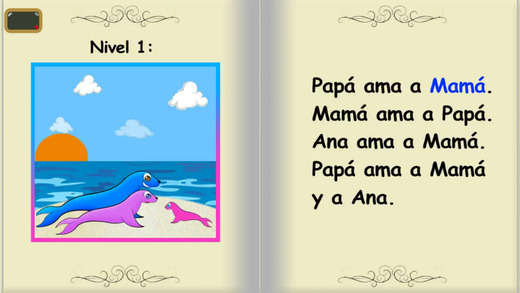
What a student learns in one language is transferred and applied to the second language. As teachers, we also know from experience, that as one learns a second language, the first language is strengthened. This usually was the case for bilingual students learning English as a second language. Now, we have students learning Spanish as a second language with Lee con Ángel. The same premise applies, only now the languages are reversed!
What a student learns in one language is transferred and applied to the second language. As teachers, we also know from experience, that as one learns a second language, the first language is strengthened. This usually was the case for bilingual students learning English as a second language. Now, we have students learning Spanish as a second language with Lee con Ángel. The same premise applies, only now the languages are reversed!
How exciting to see all children of any race or ethnicity learning Spanish as a second language and developing Bi-literacy or multi-literacy in the process!
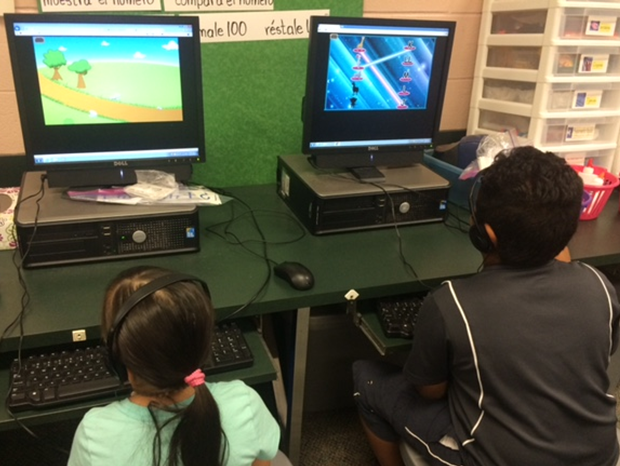
ESGI has played a crucial role in this journey because it hosts the digit versions of Lee con Ángel tests. Teachers who use ESGI Software for assessment purposes have the best of the digital age. Teachers we have met use ESGI for parent reports, report cards, RtI data disaggregation, test-item analysis to create small groups, and classroom management. Combine ESGI with Lee con Ángel in the classroom and you have a winning combination!
ESGI has played a crucial role in this journey because it hosts the digit versions of Lee con Ángel tests. Teachers who use ESGI Software for assessment purposes have the best of the digital age. Teachers we have met use ESGI for parent reports, report cards, RtI data disaggregation, test-item analysis to create small groups, and classroom management. Combine ESGI with Lee con Ángel in the classroom and you have a winning combination!
Lee con Ángel can be used for teaching:
- Spanish concepts of print in mini-lesson format
- comprehension practice (similar to standardized online tests)
- fluency-building stories that help students jump levels of reading
- interactive games to develop phonemic awareness
- original songs that bring all the sounds of the Spanish language to life
Suddenly the classroom has become a place where students work independently to gather and practice skills, while teachers work with smaller groups to pinpoint specific skills.
Kishmorr Productions, LLC has completed one successful pilot in a Dual Language Program within a suburban school district near Houston, Texas. View the white paper HERE.
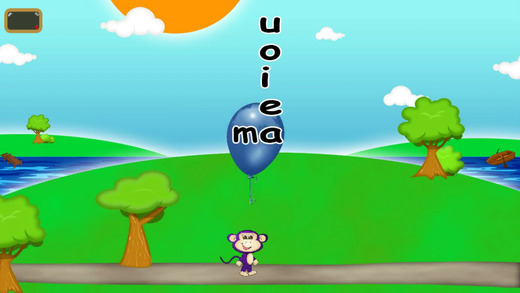
This data was collected using ESGI making the process painless, quick, efficient and the data so easy to analyze. All thanks to the user-friendliness of this software. The second pilot is underway in another school district near the border of Mexico-Texas. ESGI is playing a vital role in the collection of this data. We are eager to share the results of how well students learn to read using tests that are already on the ESGI software that coordinate with Lee con Ángel. In the future, we expect to show how skills are strengthened in the first language as the students develop literacy in Spanish using Lee con Ángel. Having so many tests in ESGI allows teachers to add to their ‘tool bag’ of instructional strategies. We know that the future is bright for students learning to read in Spanish. It's even brighter for teachers who use ESGI Software and Lee con Ángel in the classroom!
This data was collected using ESGI making the process painless, quick, efficient and the data so easy to analyze. All thanks to the user-friendliness of this software. The second pilot is underway in another school district near the border of Mexico-Texas. ESGI is playing a vital role in the collection of this data. We are eager to share the results of how well students learn to read using tests that are already on the ESGI software that coordinate with Lee con Ángel. In the future, we expect to show how skills are strengthened in the first language as the students develop literacy in Spanish using Lee con Ángel. Having so many tests in ESGI allows teachers to add to their ‘tool bag’ of instructional strategies. We know that the future is bright for students learning to read in Spanish. It's even brighter for teachers who use ESGI Software and Lee con Ángel in the classroom!
Interested in becoming part of the Bi-literacy movement? CHECK OUT: www.sealofbiliteracy.org
Get your free trial to Lee con Ángel by emailing: contact@kishmorrproductions.com
Mention ESGI to us at the TABE Conference in October in Galveston, Texas OR – find us at La Cosecha Dual Language Conference in Santa Fe, New Mexico in November and win a six-month subscription to Lee con Ángel.
Mention ESGI to us at the TABE Conference in October in Galveston, Texas OR – find us at La Cosecha Dual Language Conference in Santa Fe, New Mexico in November and win a six-month subscription to Lee con Ángel.
Research mentioned: Collier, V. & Thomas, W. (2004). The astounding effectiveness of dual language education for all. NABE Journal of Research and Practice, 2(1).
Cummins, J. (1996). Negotiating identities: Education for empowerment in a diverse society. (Ontario, CA: California Association for Bilingual Education).
Share this post
Tuesday, May 3, 2016
Apreciamos Maestros
We do appreciate teachers and are reminded to say so on National Teacher Appreciation Day. However, it is the Bilingual ones, the ones who have to think, plan, speak, write and prepare in two languages that are near and dear to our hearts. Thank you…Gracias….Merci!
We can relate to the times when you have to be so much to so many and still try to leave some for yourself. Look into the eye of most teachers and that tired, guarded glint is there. It is trying to balance everything and stay on their toes.
We salute you- we appreciate you- we support you and feel that you are the unsung heroes of education. Not because you do so much more, Coaches are dedicated too, so many teachers are doing such great work, but the Bilingual and Dual Language teachers are truly keeping a culture alive by speaking two languages.
Nosotros apoyamos y apreciamos a ustedes los maestros y maestras de estudiantes aprendiendo en dos lenguas…¡Viva BI-Literacy!
Thursday, January 14, 2016
Dr. Chasteen's White Paper regarding successful results of Lee con Ángel 2015 Pilot
Lee Con Ángel: Fostering Spanish Literacy in Bilingual
Students
By
Cynthia Chasteen, PhD, Lori Morris, & Bette Kish
According
to a 2015 report by the Instituto Cervantes (eldiae.es/wp, n.d.), the United
States is the second-largest Spanish-speaking country after Mexico, with 41
million native Spanish speakers and 11.6 bilinguals. As the number of Spanish-speaking students in
US schools continues to rise, it is imperative that schools implement programs
to successfully foster Spanish literacy.
Lee Con Ángel
Backed
by research on the cognitive benefits of bilingualism (Bialystok, 2010;
Bialystok & Feng, 2009; Bialystok & Viswanathan, 2009; Kovács &
Mehler, 2009 a, b);
the impact of students’ proficiency/literacy in their native
languages on the acquisition of additional languages (Cummins, 1996; Krashen,
1996); as well as what the research duo of Collier and Thomas (2004) deem “The
outstanding effectiveness of dual language education for all” (p. 1), two
former bilingual teachers have answered the call and created an online Spanish
reading program for students in Pre-Kindergarten through Second Grade.
Lee
Con Ángel is an online Spanish reading program created by Kishmorr Productions,
LLC, a company founded by retired bilingual teachers Bette Kish and Lori
Morris. They have over 40 years of
combined experience with Bilingual, Special Education and Dual Language
students in the Elementary level. Lori
taught Spanish in High Schools for eight years, but finished her career with
elementary-aged children to help them develop literacy skills in Spanish.
Building
on their classroom experience, Kish and Morris were also influenced by Fountas and
Pinnell’s system of leveled texts as well as the Texas State Spanish Language
Arts and Reading Standards. As they
created Lee Con Ángel, Kish and Morris realized the impact and the increased
level of during computer time, and developed a program that is user friendly and
provides activities as well as assessments and resources for teachers and
parents.
Bette
Kish had the idea of creating an online Spanish Reading Program when there
weren’t any suitable computer resources for her Bilingual Special Education
Students. Using a childhood original
song as the inspiration for the parade song, Lee con Ángel began. Lori Morris was a colleague and Bilingual
Teacher for primary and secondary students.
The two began collaborating on games, songs and writing the 22 original
stories in Spanish in 2010. The duo took
ideas from written description, converted the tunes to sheet music, got two
copyrights, and took the power point ‘story boards’ to a web developer. The program’s original title was: Ángel, Mi Ayudante de Lectura and was released
in 2013 but was shortened to Lee con Ángel in 2015. Now, the complete program is in two formats
with the same content.
Both
teachers collaborated on the games and stories making sure the skills were ‘scaffolded’
to meet the needs of all students. For
example, the first story has only the vowel A and consonants that form open syllables,
then the second story has A and E, and so forth, adding one vowel at a time per
story so that students can learn to develop fluency and comprehension
independently. The focus is on giving
students the choice to practice skills that teachers introduce or chance to
review and develop the skills necessary but also have the option of following a
suggested path of structured learning.
This is done with the blinking icons that guide students through the
activities, games and songs that are based on a sequential path using
cumulative skills from basic phonemic awareness to higher-level reading of
texts up to a second grade level. While
the path of blinking icons is recommended, students are not locked into any one
activity. This is a unique feature of
Lee con Ángel.
The Setting/Participants
In January
of 2015, Kish and Morris conducted a four month pilot test of Lee con Ángel in
two elementary schools in a school district located outside a large city in
Texas. The students were in seven dual language classes with a 50/50 model of
simultaneous literacy.
Three Pre-Kindergarten and four Kindergarten classes
participated in this pilot study, with a total of 132 students. On average,
each class had five native English speakers and the rest were native Spanish
speakers.
Introductory Classroom Data for pilot of Lee con Ángel
January – May, 2015
|
Class Label
|
Lee con Ángel
Status
|
School
Description
|
Grade level
|
No.
of Students
|
English
Speakers
|
%
Correct on Pre-Test
|
%
Correct
on
Post-Test
|
|
A-
Teacher 1
|
Used program
|
Rural Setting
|
Pre-K-am
|
22
|
4
|
22
|
56
|
|
B-
Teacher 1
|
Control group
|
Rural Setting
|
Pre-K-pm
|
20
|
2
|
10
|
33
|
|
C-
Teacher 2
|
Used program
|
Rural Setting
|
Kinder
|
21
|
5
|
34
|
65
|
|
D-
Teacher 3
|
Control group
|
Rural Setting
|
Kinder
|
20
|
5
|
57
|
68
|
|
E-
Teacher 4
|
Used program
|
Suburban
|
Pre -K
|
15
|
9
|
4
|
26
|
|
F-
Teacher 5
|
Used program
|
Suburban
|
Kinder
|
16
|
3
|
64
|
91
|
|
G-
Teacher 6
|
Control group
|
Suburban
|
Kinder
|
18
|
9
|
47
|
93
|
Table 1
All classes were teaching children
to learn to read in both English and Spanish. The partner teachers chose one
class to use the program 15 minutes a day for 3-5 times a week.
The pilot study utilized an
experimental design, so there were control and experimental groups. Every class
was tested, but only half had access to the program (experimental group), while
the other half of the students were in the control group and did not have
access to Lee con Ángel. One Pre-Kindergarten teacher had a dual language class
but did not have a counterpart to act as a control group, so the group’s growth
is compared with the other Pre-Kindergarten classes.
Students accessed Lee con Ángel via
the internet with Chrome Books in classroom literacy stations. The children were given four tests in January
before starting to use the program, and then four more tests at the end. These tests were to evaluate the students’
ability to recognize letters, sounds, read words and show understanding of
concepts of print.
Demographics
of Two Participating Schools
|
School 1
|
School 2
|
|
Rural- outskirts of a major city in Texas
|
Suburban- outskirts of a suburb of a major city in Texas
|
|
913 students enrolled – Pre-K – 5th grade
|
578 students enrolled – Pre-K – 5th grade
|
|
Economically Disadvantaged 73.2%
English Language Learners 35.7% Special Education 6.6%
|
Economically Disadvantaged 27.0%
English Language Learners 18.3%
Special Education 5.5%
|
|
2 PK/2 Kinder: 83 students
|
1 PK/2 Kinder: 49 students
|
Table 2
In January, each student participant
was given a Pre-Test, the Letter Identification Test (LID Test). If a student could read, he/she took a timed
word test, in which students read as many words as possible in two
minutes. All tests were administered by
Kish and Morris. The Spanish Pre-Test assessed the following skills: upper/lower case letter identification,
vowel/consonant identification and initial letter recognition of common animal
names.
Post-Test
In May, the students were given a
Post-Test, LID Test, Word Test, and a Concepts of Print Test (Ángel Conceptos
de Impresa), all administered in Spanish.
The Spanish Post-Test assessed the same as the Pre-Test, and also
required that students identify words that were associated with pictures.
Results of Pilot Test
Pre-Kindergarten
School 1 To
begin the discussion of the data gleaned from the pilot test, we first turn to
the Pre-Kindergarten (PK) classes.
School 1 had two classes represented in the pilot study. Class A (see Table 1) was a morning section
of PK and an experimental group that used Lee Con Ángel while Class B was an
afternoon section and served as a control group, and the same teacher taught
both sections. School 2 only had one PK
classroom and this group also used the program.
School
1 was located in a rural setting and students who attended the school were from
a lower socioeconomic status (SES) than the students who attended School
2. The data revealed that the students
in the experimental group improved 34% on their Post-Test scores after the four
months of the study. Individual scores
indicated that students identified an average of four out of the 61 letters and
sounds on the LID test administered in January and then identified 48 out of 61
on the test given in May. Conversely, students
in the control group who did not have access to Lee Con Ángel correctly
identified 35 out of 61 sounds after the same four months of instruction.
Pilot
Program Overview of Results with Lee con Ángel
Online Spanish
Reading Program
|
School /Class
|
Letter ID
January- May
Results
|
Word Test
January Results
|
Pre-Test
Results
% correct
|
Word
Test
May Results
|
Post Test
Results
% correct
|
|
A- Used Program
Teacher 1- am
Pre-K- Rural
|
20/21 students improved
|
8/21 Students can read
|
22
|
15/21
Students can read
|
56
|
|
B- Control Group
Teacher 1- pm
Pre-K – Rural
|
15/ 20 students improved
|
2/20
Students can read
|
10
|
4/20
Students can read
|
33
|
|
C- Used program
Teacher 2-
Kinder- Rural
|
15/20 students improved
|
6/20 students can read
|
34
|
15/20 students can read
|
65
|
|
D- Control group
Teacher 3 –
Kinder – Rural
|
15/ 20 students improved
|
2/20 students can read
|
57
|
4/20
Students can read
|
68
(8 students made negative
progress)
|
|
E- Used program
Teacher 4-
Pre-K – Suburban *
|
28% of students improved
|
0/15
|
4
|
1% of students can read
|
26
|
|
F-Used program
Teacher 5-
Kinder – Suburban
|
97% knew all letters in
January
|
Students read 437 words
|
64
|
Students read 800 words
|
91
|
|
G- Control group
Teacher 6-
Kinder - Suburban
|
97% knew all letters in
January
|
Students read 412 words
|
47
|
Students read 850 words
|
93
|
Table 3
*Kishmorr researchers noticed
that students were not familiar with the program in the spring which indicated
to us that they didn’t get to use Lee con Ángel as much as we had expected.
School
2 There was only one Pre-Kindergarten class in School 2,
which was located in a more suburban area than School 1, and this class
received the Lee Con Ángel program. There were 15 students in the class
including 9 native English-speaking students. Individual analysis showed that
seven out of 15 children learned more than 15 letters; four students went from not knowing any
letters in the Pre-Test to being able to identify more than 30 letters or
sounds in the Post-Test. Also, all students in Class E made progress during the
study period.
Individual Results in School 1
After
careful analysis of individual results, the underlying story with Class A was
that all but one student showed significant gains in basic literacy skills.
After using Lee Con
Ángel, the lowest score on the LID Test was 12; however, everyone
improved. Fourteen students identified more than 50 of the 61 letters, and
three students knew 30-50 of the 61 Spanish sounds.
In Class A,
there were 22 tested students and 56% of the students passed the Post- Test.
Class B, the control group, had three students who improved more than 50% on
Post-Test scores as compared to the Pre-Test scores, five who improved more
than 20%, and six who improved by a range of 5-19%. There was one student whose
score decreased by 15% and one who did not take the Pre-Test. Only 33% of
students mastered the Post-Test, 57% could identify Spanish letters, and 38%
could tell six basic concepts of print in Spanish.
Table 4
Table
5
Kindergarten
School 1 The Kindergarten children at
School 1 had two teachers who team-teach in the dual language program. One
teaches in English while the other teaches only in Spanish. Students rotate
back and forth all week to divide their time equally between the two teachers
and two languages. The most notable results to report were the four students in
the experimental group who improved more than 61% on the Post-Test; their peers
in the control group who did not receive access to the online program Lee con
Ángel did not experience as much success.
Students in the experimental group were able to identify more letter
sounds than the students in the control group.
However, the most interesting finding was related to negative
results. Of the students who used the
program, only two
Scored lower on the Post-Test than they did on the Pre-Test;
however, the control group had nine who regressed during the same four month
period.
School
2 Like School 1, the Kindergarten classes at School 2 also
had two teachers. One taught in English, while the other taught all content in
Spanish, allowing students to acquire both languages as well as all of the
concepts required by state standards. The students at School 2 were more
diverse than those at School 1, with a few Asian and African-American students
in the study. Other students shared stories of grandparents coming from South
America or the Caribbean Islands.
Parents articulated the desire for their children to be biliterate, and
several of the parents were multilingual.
After the four month study period,
both groups of students improved; however, the group that used Lee Con Ángel
was able to read more words than their peers in the control group. Students in
the experimental group (Class F) showed improved Post-Test scores; 79% knew the
concepts of print when asked in Spanish, 55% could read words in 2 minutes, and
97% identified the majority of the 61 letters of the Spanish alphabet. Careful
analysis between the experimental and control groups revealed that the students
who used Lee Con Ángel knew 16 more sounds than the students who did not use
the program. One of the major differences between the two groups was the number
of students who could read words in a timed setting. Individual test scores
revealed that seven students in Class F (experimental group) could read 35 or
more words in two minutes while only four students in the control group (Class
G) could read that many.
It is important to note that these
two classes from School 2 had very high performing students and the benefits of
Lee con Ángel were more apparent in the scores of the students at School 1, who
began the program possessing fewer skills. Although all students benefitted
from the online reading program, Lee con Ángel is more effective with students
who need remediation or motivation to learn literacy skills.
Teacher Feedback
All the participating teachers
reported that students enjoyed using Lee con
Ángel.
Furthermore, one teacher gave a video testimonial where she described how a
non-verbal student gained enough confidence after using Lee con Ángel to begin
speaking to her and other students in his native Spanish, while another was
able to learn Spanish by using this program online. This is a testament to the
value of songs that engage the auditory learner, how interactive games engage
the tactile/ kinesthetic learner and visual cues engage the visual learner.
Future Directions
This four
month pilot provided a brief window into the potential of Lee Con Ángel in
fostering students’ Spanish literacy. Since
this inaugural pilot study, six more Elementary schools from all over the
United States and 14 additional classrooms have adopted Lee Con Ángel. In the future, Kishmorr Productions will
conduct longitudinal studies following students’ and schools’ progress and
engage in follow-up visits and interviews with administrators, students,
teachers and parents.
We would like to thank the
administrators, teachers, principals and children of this school district for
cooperating with Kishmorr Productions, LLC and allowing us to come into the
classrooms to test students. We know that interruptions to instruction should
be kept to a minimum as these are the types of things that vary instruction
from class to class and slow down progress. Despite variances in teacher
personality, priorities regarding instruction and differences in student
abilities, the data from this pilot does confirm overall that students who had
access to Lee con Ángel performed better on the Post-Test, recognized more
letters, read more words, and identified more concepts of print in Spanish than
those who were in the control groups.
For more information visit: www.leeconangel.com
Or email us at: contact@kishmorrproductions.com
References
Bialystok, E. (2010). Developmental Psychology, 46.
Bialystok, E. & Feng, X. (2009).
Brain Language, 109.
Bialystok, E. & Viswanathan, M.
(2009). Cognition, 112.
Collier, V. & Thomas, W. (2004).
The astounding effectiveness of dual language
education
for all. NABE Journal of Research and
Practice, 2(1).
Cummins, J. (1996). Negotiating
identities: Education for empowerment in a diverse
society.
(Ontario, CA: California Association for Bilingual Education).
Kovács, A.M. & Mehler, J.
(2009). Science 325, 611
Kovács, A.M. & Mehler, J.
(2009). Proc. Natl. Acad. Sci. U.S.A. 106, 6556
Krashen, S.D. (1999). Condemned without a trial: Bogus arguments
against bilingual
education.
Portsmouth, NH: Heinemann.
Subscribe to:
Posts (Atom)